

Bach Standard Series Trumpet Mouthpieces

The Bach BA351 Trumpet Mouthpiece series is a long-established standard among trumpet players at every level. Known for consistency and reliability, each mouthpiece is manufactured to precise specifications to ensure predictable response, centred tone, and a comfortable rim feel.
Differences between BA351 sizes affect rim diameter, cup depth, throat, and backbore design, allowing players to select a mouthpiece that best supports their embouchure, endurance, range, and tonal preference. Larger sizes generally produce a broader, fuller sound, while smaller sizes emphasise efficiency and upper-register response. Shallow cups increase brilliance and projection, deeper cups favour warmth and depth, and wide-rim models improve comfort during extended playing.

How to Choose the Right Trumpet Mouthpiece
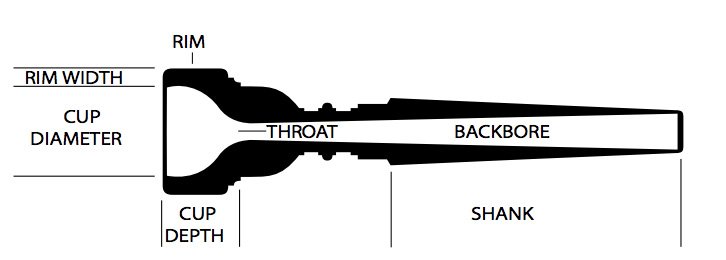
A trumpet mouthpiece consists of four main components: rim, cup, throat, and backbore. The relationship between these elements plays a major role in how the mouthpiece feels and responds. When choosing a mouthpiece, consider how each component affects performance.
Rim
-
Wide rim: Increases endurance
-
Narrow rim: Improves flexibility and range
-
Round rim: Improves comfort
-
Sharp rim: Increases brilliance and precision of attack
Cup
-
Large cup: Increases volume and control
-
Small cup: Reduces fatigue and strain
-
Deep cup: Darkens tone, especially in the low register
-
Shallow cup: Brightens tone and improves response, especially in the high register
Throat
-
Large throat: Increases blowing freedom, volume, and tonal breadth; can sharpen the high register (and in very large sizes, the low register as well)
-
Small throat: Increases resistance, endurance, and brilliance; can soften the high register
Backbore
Backbores vary in both size and shape, making them difficult to compare directly. Different backbore designs can darken or brighten the tone, raise or lower pitch in specific registers, and affect overall volume and response. The impact of the backbore depends on how it works in combination with the cup and throat.
Because mouthpiece response varies from player to player, descriptions of playing characteristics are necessarily subjective. All specifications and recommendations should be considered general guidelines rather than absolute rules.
| Size | Cup Code | Rim Style | Cup Description | General Playing Characteristics |
|---|---|---|---|---|
| 1C | C | Standard | Medium cup | Very full, broad, dark core |
| 1½C | C | Standard | Medium cup | Full tone with added flexibility and comfort |
| 1FC | FC | Standard | Shallow, focused cup | Brighter, efficient response |
| 2C | C | Standard | Medium cup | Full tone with control |
| 3C | C | Standard | Medium cup | Balanced, versatile |
| 3CW | C | Wide | Medium cup | 3C feel with increased comfort |
| 3D | D | Standard | Shallow cup | Bright, projecting sound |
| 5B | B | Standard | Deep cup | Darker, warmer tone |
| 5C | C | Standard | Medium cup | Focused and flexible |
| 6B | B | Standard | Deep cup | Dark tone, compact rim |
| 7C | C | Standard | Medium cup | Bright and responsive |
| 7D | D | Standard | Shallow cup | Very bright, quick attack |
| 7E | E | Standard | Very shallow cup | Maximum brilliance, high range |
| 7EW | E | Wide | Very shallow cup | Lead playing with added comfort |
| 9C | C | Standard | Medium cup | Compact and efficient |
| 10C | C | Standard | Medium cup | Extremely focused |
| 12C | C | Standard | Medium cup | Very small rim, minimal lip area |